
 David Hacker
You text a customer a confirmation. Your screen says it sent. Nothing arrives, nothing bounces back, and you find out two days later when they turn up on the wrong afternoon.
That is not a bug in your phone system. It is the carriers dropping the message on purpose, because your business is not registered to send it.
The message did not fail. It was filtered.
Since the early 2020s, AT&T, T-Mobile and Verizon have required any business texting from an ordinary ten-digit phone number to register who it is and what it sends. Unregistered business traffic gets filtered, and the cruelty of the design is that it is filtered silently: the message is accepted, marked sent, and never handed to the phone.
The programme is called A2P 10DLC. A2P is application-to-person, meaning a business texting a customer rather than two people texting each other. 10DLC is a ten-digit long code, which is telecom for "a normal phone number". So: the rules for businesses texting people from normal numbers.
There is no provider in the country you can switch to that avoids it, because the requirement belongs to the carriers who own the last mile to the handset. The one thing I can do about it is not lie to you: if your business is not registered, a send from here is refused up front with the reason, rather than accepted and quietly dropped.
What you are actually registering
Two things, and the difference matters because they fail for different reasons.
A brand is your business: legal name, EIN, address, website. It answers "who is this?". It is checked against public records, and it is usually the easy half.
A campaign is what you send and how people agreed to receive it: appointment reminders, order updates, replies to customers who texted first. It answers "why should this be allowed?". This is the half that gets rejected, and it is rejected on the quality of your description far more often than on anything about your business.
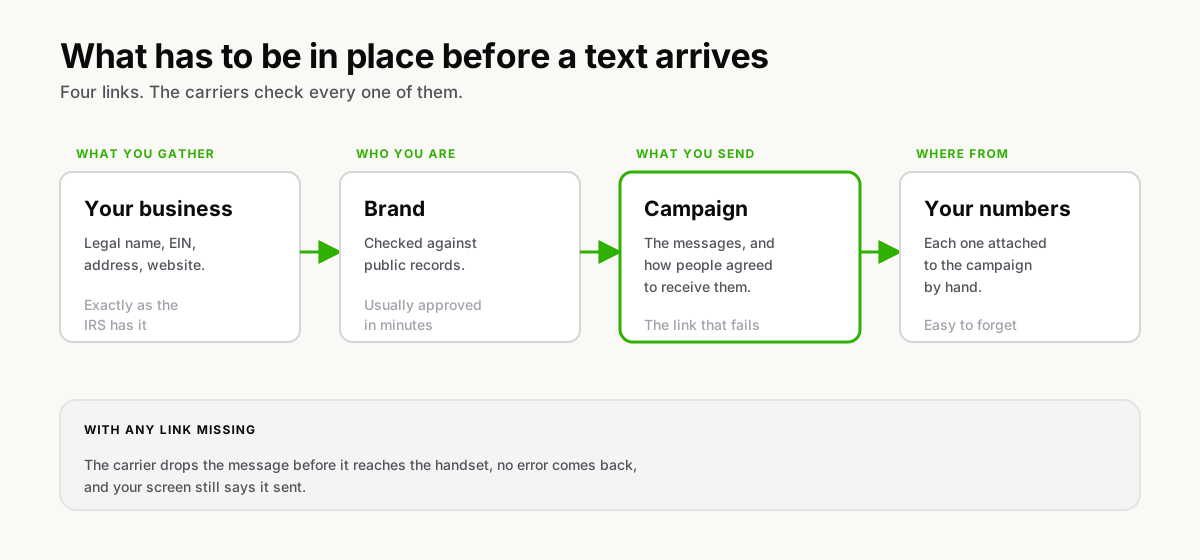
Both live in an industry database the carriers query on every message. An approved campaign also carries a reputation score that governs how fast you may send. For a business texting its own customers about their own appointments, that score looks after itself.
What it costs
As of September 2026, and the wizard quotes you the exact figures before you submit anything:
| Fee | Amount |
|---|---|
| Brand registration | $5.00, once |
| Campaign review | $15.00 per attempt |
| Monthly campaign fee, Low volume (the default) | $2.00 |
| Monthly campaign fee, Customer care and most others | $10.50 |
Read aloud: a typical business pays twenty dollars once and two dollars a month. Five for the brand, fifteen for the campaign review, then the Low volume campaign at two dollars a month, which covers up to two thousand texts a day and is the default for a reason — almost nobody reading this sends more than that. These are carrier costs plus a small fee for running the registration, and nothing is billed until you choose to register.
Two things about the invoice you are right to be annoyed by. The carriers bill the first three months of the monthly campaign fee upfront, so the first bill is bigger than the monthly rate suggests. And a rejected campaign costs another fifteen dollars to resubmit, because the fee is per review attempt. That second one is the entire reason the form is fussy with you.
What to have ready before you open the form
Twenty minutes of gathering saves a rejection:
- Your legal business name, exactly as the IRS has it on your EIN confirmation letter. "Acme Inc" and "Acme, Inc." are two different businesses to a matching engine, and this is the single most common rejection.
- Your EIN, and a physical business address — a PO box is refused.
- A live website that matches the brand name, carrying a privacy policy that says mobile numbers collected from customers are not shared with third parties for marketing.
- The exact wording of how customers agree to be texted, and ideally a screenshot of it, with the consent box shown unchecked. A pre-checked box is not consent.
- Two real example messages you actually intend to send.
No EIN? A sole-proprietor path verifies you by text instead, but it caps you at one campaign, one phone number and roughly a thousand messages a day. If you expect to text from more than one number, get an EIN first.
The four things that get a registration rejected
The legal name or EIN does not match the record. Fix: read the EIN confirmation letter character by character, commas and periods included.
The message flow is too vague. "We send texts to our customers" is rejected almost every time. Fix: describe the actual path a number takes into your business. "A customer books an appointment on our website or by phone. We text a confirmation immediately and a reminder the day before. They can reply STOP at any time."
The sample messages do not name your business. Fix: start each one with it. "Acme Plumbing: your appointment is confirmed for Tuesday at 9am."
No opt-out language anywhere in the samples. Fix: put "Reply STOP to opt out" on at least one of them. Carriers actively check for this.
When a submission does come back, it comes back with the carrier's stated reason in plain language, and you edit and resubmit without contacting anyone.
How long it takes
Brand approval is usually near-instant, and up to five business days if something is flagged for a human. A clean campaign clears in one to three days; an unusual one takes considerably longer. Then allow another one to three days for an assigned number to propagate across the carrier networks, during which sends can still be filtered.
I will not give you an approval date, because once it is submitted it is genuinely out of my hands. The planning rule that matters: calls work on day one, texts work when the campaign clears.
What good texting looks like once it clears
Replies land in the same place as everything else — the Inbox, or the softphone's Messages tab — rather than on somebody's personal phone. Each number decides for itself whether its texts go to one person or to a shared inbox the whole front desk can see.
STOP, START and HELP are handled for you on every registered number. Someone who texts STOP is opted out immediately, gets an automatic confirmation, and cannot be texted again until they text START. Nothing in the console overrides that, which is the point. Everyone who has opted out is listed under Settings, then Consent and DNC.
The sending comes out of a pool: 250 outbound segments per seat per month, shared across the organisation, with anything past it at 2¢ a segment. A segment is 160 characters of plain text, or 70 if you use emoji, so a chatty message can quietly be two. Inbound texts are free and unlimited.
One rule worth writing on the wall: marketing texts need a higher standard of consent than appointment reminders do, and in Florida they can only go out between 8am and 8pm in the recipient's local time. Reminders and confirmations are not subject to that window. Promotions are.
What registration does not do
It does not guarantee delivery. It removes the reason your messages are being filtered; it does not oblige a carrier to deliver something that looks like spam, and a registered number texting a list you bought will still be throttled. The system is working correctly when that happens.
It does not make texting compulsory. Registration sits behind a "Not now" button, skipping it costs nothing, and the rest of your phone service works normally without it. If you never text customers, do not register.
And it does not cover short codes or toll-free numbers, which have their own separate processes. This is the rulebook for normal ten-digit business numbers, which is what almost every small business uses.
Where to start
If your texts are vanishing today, check first whether your business was ever registered at all — it is routinely skipped at setup by whoever installed the system. Set up text messaging walks the whole process, and text registration fees has the current prices.
If you would rather someone else filled in the form, that is what I do. I write the message flow, submit it, and deal with the rejection if there is one. Book a time and bring your EIN letter.
Got a topic you want covered? Email hello@heyquad.com.
Sources for the rules outside this site: The Campaign Registry (campaignregistry.com), which operates the brand and campaign registry the US carriers query, and the CTIA Messaging Principles and Best Practices, the industry framework the carriers apply to consent, sender identity and opt-outs.